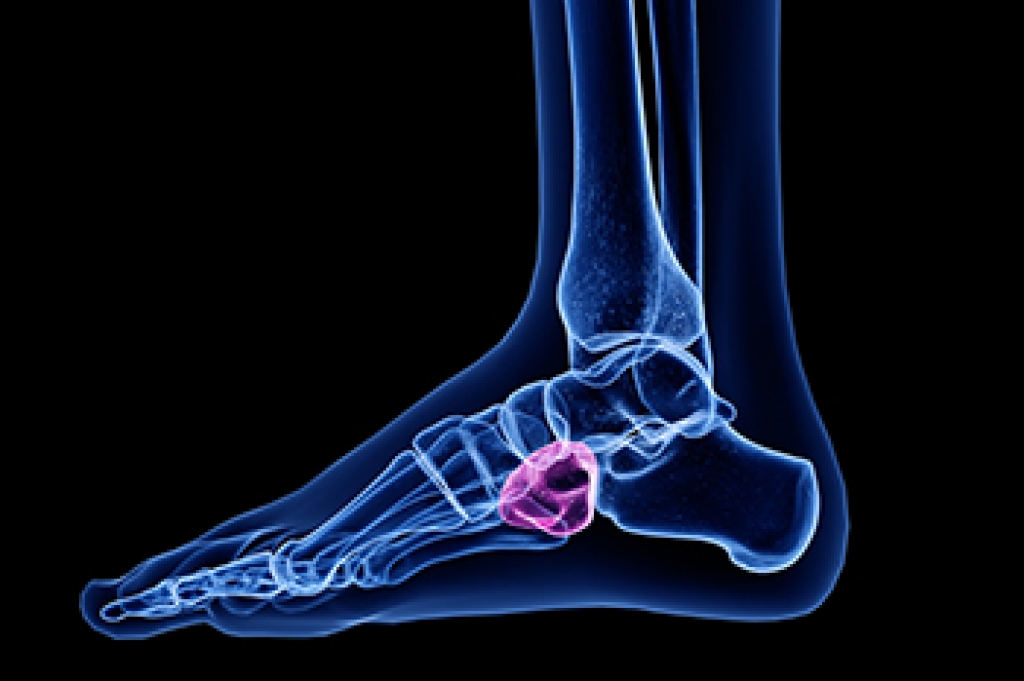
Cuboid syndrome can cause sharp or aching pain along the outside of the foot, making everyday movement uncomfortable. The cuboid is a small bone near the middle of the foot, just in front of the heel. It helps support the foot as weight shifts while walking. Cuboid syndrome develops when this bone moves slightly out of its normal position in relation to nearby bones. Stretched or injured ligaments, which are strong bands that connect bones, can allow this shift. The problem may begin after an ankle sprain or repeated stress on the foot. Runners and dancers can be affected because their activities place repeated pressure on the outer foot. Sports that involve quick changes in direction can also increase the risk. Understanding the cause of the pain helps guide proper evaluation and treatment.
Symptoms of cuboid syndrome can appear suddenly or develop gradually. Pain usually affects the outer middle portion of the foot, although it can seem to spread toward the ankle. Some patients notice weakness, mild swelling, or bruising near the painful area. Others remember feeling a small pop when the problem began. Putting weight on the foot may become difficult, especially when pushing off while walking. Patients might limp or shift their weight to avoid discomfort. Because other foot injuries can produce similar symptoms, an accurate diagnosis matters. A podiatrist can ask about recent injuries and examine the painful area. The examination can include checking for tenderness and assessing how the foot moves. X-rays may be used to rule out other problems, even though cuboid syndrome usually does not show clear changes on these images.
A podiatrist can recommend treatment based on the severity of symptoms and whether another injury is present. For persistent pain, the podiatrist may gently guide the cuboid bone toward its normal position using a hands-on technique. Supportive shoes and soft orthotic inserts can help reduce pressure on the affected area. The podiatrist can also recommend supervised movements designed to improve joint motion and foot strength. Recovery varies according to the original injury and the degree of irritation. Many patients notice improvement within days, but healing can take several weeks when an ankle sprain or another injury is involved. Follow-up care allows the podiatrist to check progress and address continued discomfort. If you have symptoms of cuboid syndrome, it is suggested that you schedule an appointment with a podiatrist for a diagnosis and appropriate treatment.
Cuboid syndrome, also known as cuboid subluxation, occurs when the joints and ligaments near the cuboid bone in the foot become torn. If you have cuboid syndrome, consult with One of our podiatrists from Diagnostic Foot Specialists. Our doctors will assess your condition and provide you with quality foot and ankle treatment.
Cuboid syndrome is a common cause of lateral foot pain, which is pain on the outside of the foot. The condition may happen suddenly due to an ankle sprain, or it may develop slowly overtime from repetitive tension through the bone and surrounding structures.
Causes
The most common causes of cuboid syndrome include:
- Injury – The most common cause of this ailment is an ankle sprain.
- Repetitive Strain – Tension placed through the peroneus longus muscle from repetitive activities such as jumping and running may cause excessive traction on the bone causing it to sublux.
- Altered Foot Biomechanics – Most people suffering from cuboid subluxation have flat feet.
Symptoms
A common symptom of cuboid syndrome is pain along the outside of the foot which can be felt in the ankle and toes. This pain may create walking difficulties and may cause those with the condition to walk with a limp.
Diagnosis
Diagnosis of cuboid syndrome is often difficult, and it is often misdiagnosed. X-rays, MRIs and CT scans often fail to properly show the cuboid subluxation. Although there isn’t a specific test used to diagnose cuboid syndrome, your podiatrist will usually check if pain is felt while pressing firmly on the cuboid bone of your foot.
Treatment
Just as the range of causes varies widely, so do treatments. Some more common treatments are ice therapy, rest, exercise, taping, and orthotics.
If you have any questions, please feel free to contact our offices located in Houston, TX, Houston, TX, and Bryan, TX . We offer the newest diagnostic and treatment technologies for all your foot care needs.
